Secure Attachment as a Way of Life
Why we pause our business meetings so two grown adults can push and pull on each other.
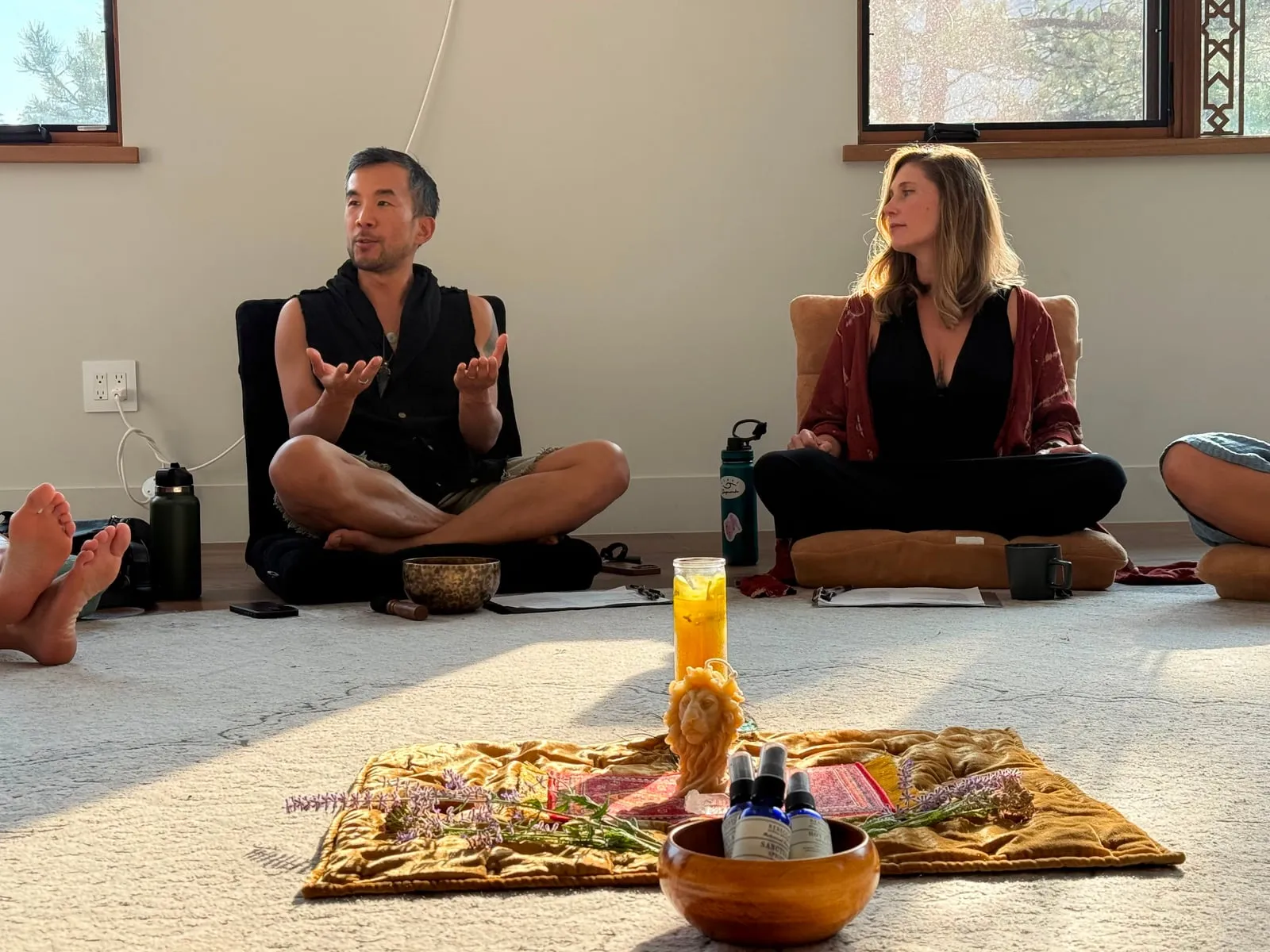
We’re three-quarters through the 4-week True Contact cohort that Kiki and I are teaching on secure attachment.
And people are breaking through. Touching shame, anger, power. One woman pressed her feet into the floor and pushed with sound, stuck anger moving out of her body and into another nervous system that could finally receive it.
Another is meeting the conviction that life can’t meet her — whether it’s with her partner or in the fear that she’s taking too much space. Places they haven’t been able to reach with years of therapy, energetic work, even medicine journeys.
The more we teach, the clearer it becomes: what we’re transmitting isn’t a technique. It’s a way of life.
Secure attachment has become a way of life for us — a cultivation of unconditional trust in life itself, that it can hold us in anything.
We’re still discovering the practice ourselves. Every cohort session shows us something we couldn’t see before. We are co-awakening with the people we teach.
The dyad practice we teach in the cohort — honed over the past five years, rooted in a deep science of attachment repair — is the daily, relational form of that trust. And nowhere is it more alive than in how we’re building the company.
In the middle of a business meeting, when a wobble moves through, the team pauses on the agenda to meet it.
Two of us face each other and reach. Sometimes what’s needed is a pull — fingers closing around each other’s wrists, drawing in contact and reassurance. Sometimes it’s a push — palms pressed into palms, moving out the anger that’s been stuck in the body.
Either way, one of us drops into what is actually there — usually some experience that never got met when we were young — and the other stays present, and meets it.
A push or pull into contact. That’s the technology.
It’s a radical way of building a business — surrendering attachment to the agenda, letting two grown adults pull in reassurance, or push out what’s stuck, while the meeting waits. I don’t know anyone else building a company this way.
I feel the part of me that sometimes just wants to keep driving forward. We have content to prepare! Things to figure out! Yet every time we slow down and touch the old wound in the body, we come into a deeper devotion: this is the attachment-first way of life we want to share, and the way we want to build the company.
It also doesn’t stop at the company.
This weekend, we’re teaching a 2-day intensive on building secure attachment through the dyad practice with three families in our home. Newborns will be nursing through the workshop, and our daughter will be moving through the space of our living room. We’ll be working with our inner children and our children at the same time — the little ones in the room mirroring the little ones within us.
The other day during tea, Kiki thanked me with tears in her eyes: I get to be a mother first, and I still get to facilitate. She’s such a masterful facilitator — she knows how to read the room and meet what’s there.
It touched this place in me: like my dad and grandfather, I’m not just creating a school. I’m creating a place where our family gets to work.
Medicine runs in my blood — I mean that literally. My grandfather opened a Chinese herb store in San Francisco Chinatown more than fifty years ago. My dad took it on; it’s still there, now the oldest Chinese herb store in California. My grandfather was a doctor: he read what a body was carrying and guided it back into balance. We’re doing the same work with different instruments: guiding people back into their bodies, to feel the attachment wounds that have been waiting there all along.
Even the technology echoes him. A couple of weekends ago I built the school an internal dashboard to keep tabs on the whole field, so no one gets missed or dropped. I named it Pulse. I realize only as I’m writing this that reading the pulse was part of how my grandfather knew what a body needed; it’s part of how we will read the pulse of the field and know what the school needs.
But the deepest technology we’re building isn’t the software I write for the school. It’s the form of a practice that puts the building of secure attachment at the center of everything.
Our intention for these cohorts is not for people to leave feeling that we’re amazing coaches and facilitators. I think we are. But we don’t want to be the reason for their transformation. The way of life has to become theirs.
We want people to feel that this practice is a part of them now — that they are creating the transformation for themselves, weaving it into their day-to-day, a new way of relating to reality. The calling I feel is for the magic to live in the form itself, so it works even when we’re not in the room.
I’ve been to dance workshops where you leave feeling like the teacher is an amazing dancer. And I’ve left workshops feeling: wow, I’m pretty good at this. I can do this.
The teacher might still be amazing. But that second feeling is what we want for our students. The one thing we want them walking away with, felt in their bodies: I can do this. I am the creator of my own reality.
Already, one of the students in our cohort, a therapist, is sharing the practice with her clients. It made me cry to fully let that in.
My dad brought his father’s dream into reality: he built an actual, accredited school in San Francisco, where several dozen students earned bachelor’s degrees in Chinese medicine. I remember sitting in the audience at a graduation, watching my dad on stage as he talked about what the school meant to him. He was crying. I’ve seen my dad cry maybe three times in my life.
And the other day, grief moved through me: that school ended when he ran out of energy to operate it. He never fully differentiated himself from it. It required him.
A way of life doesn’t. That’s the yearning underneath the grief: to build something that can exist outside of me. So that when Kiki steps away for a season of motherhood, or when I’m gone — the school still lives on. The practice still lives on. The technology still lives on.
The medicine still lives on.